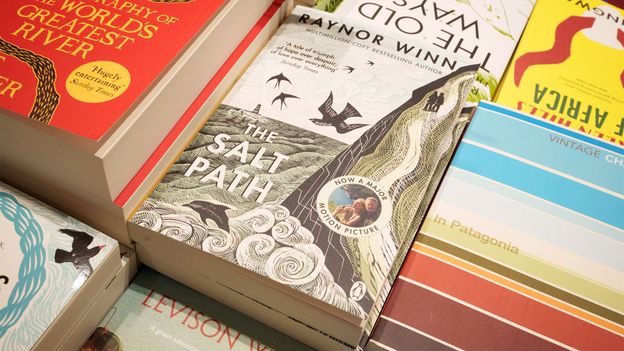
But the story shows no sign of going away, with a podcast series coming in 2026. Hadjimatheou, who was planning a reporting trip to Syria when an Instagram direct message first tipped her off to The Salt Path story, calls it “one of the biggest scoops of my journalistic career”.
At first, there were reports of bookshops offering refunds to betrayed readers. Yet, in the aftermath of the investigation, The Salt Path climbed back up the bestseller list. Cinemas continued to show the film. Today, you can still find the memoir on prominent display in some bookshops.
In the documentary, Hadjimatheou asks readers at a literary festival about their reaction to the scandal. While some are shocked, many seemed nonplussed by the allegations. “It’s a book about a walk. It’s not about something life-changing. Enjoy the book,” says one. “With every story there’s always a bit of fiction added in,” offers another.
The fact v fiction debate
The saga has ignited discussions about how truthful memoir needs to be, a debate that emerges every time there’s a story like this. In 2006, after his memoir A Million Little Pieces was found to be heavily fabricated in sections, James Frey said he did it “in order to serve what I felt was the greater purpose of the book”.
Earlier this year, the writer Lily Dunn published a book dedicated to the craft of memoir called Into Being. The book came out of 10 years of teaching and mentoring memoir, and her own experience of writing one: 2022’s Sins of My Father: A Daughter, a Cult, a Wild Unravelling.